







Starting a business in the United Arab Emirates has become much simpler than it was a decade ago. The country is built around trade, services, and global connectivity, and the government has made a clear effort to attract entrepreneurs from all over the world. Today, you don’t need local partners in most cases, you don’t need excessive capital, and you don’t need to wait months to get started.
If you follow the process step by step, setting up a business in the UAE can be straightforward and fast. Here’s how it actually works.

Step 1: Decide Your Business Activity
Everything begins with your business activity. In the UAE, licenses are issued based on what you do, not just what you call your company.
Business activities fall into broad categories such as:
- Trading and general commerce
- Professional services and consultancy
- Manufacturing and industrial activities
- E-commerce, IT, and digital services
- Tourism, food, and hospitality
Each activity has its own rules. Some need extra approvals from ministries or regulators. Others are simple and quick. Be specific while choosing. A vague or incorrect activity can create problems later when opening a bank account or applying for visas.
Step 2: Choose Mainland, Free Zone, or Offshore
This decision shapes how your business will operate.
Mainland Company
A mainland company allows you to trade anywhere in the UAE without restrictions. These companies are licensed by local authorities and are ideal if your customers are inside the country.
Mainland businesses work well in cities like Dubai and Abu Dhabi, especially for retail, contracting, restaurants, and service-based work. Most activities now allow 100% foreign ownership, which is a major advantage.
Free Zone Company
Free zones are designated areas created to attract foreign investors. They offer full ownership, simplified regulations, and predictable costs.
They are best suited for:
- Startups and small businesses
- Consultants and freelancers
- E-commerce and international trading
Popular free zones include Dubai Multi Commodities Centre, IFZA, and RAKEZ.
Free zone companies usually need a local distributor or agent to sell directly in the mainland.
Offshore Company
Offshore companies are mainly used for holding assets or international business. They cannot conduct operations within the UAE market and are not suitable for most active businesses.
Step 3: Select the Legal Structure
Your legal structure defines ownership, liability, and compliance requirements. Common structures include:
- Sole Establishment
- Limited Liability Company (LLC)
- Civil Company (for professionals)
- Branch of a Foreign Company
For most entrepreneurs, an LLC is the preferred option because it offers flexibility and limits personal liability.
Step 4: Reserve a Trade Name
The trade name must follow UAE naming rules:
- It should match your activity
- It must not include offensive or religious terms
- It should not resemble an existing registered name
Certain words like “Global,” “International,” or country names may require additional approvals. Once approved, the name is reserved for your company.
Step 5: Obtain Initial Approval
Initial approval is a confirmation from the authorities that your business can proceed. At this stage, you submit:
- Passport copies of owners
- Selected activity and structure
- Basic application details
This approval does not allow you to operate. It only clears you to complete the remaining legal steps.
Step 6: Secure Office Space or a Business Address
Every UAE company needs a registered address. Depending on your setup, this can be:
- A physical office
- A shared workspace or flexi-desk
- A virtual office (allowed in some free zones)
Your office size often determines how many visas your company can apply for, so choose carefully.
Step 7: Prepare Legal Documents
You will now submit formal documents such as:
- Memorandum of Association (MOA)
- Lease agreement or Ejari (for mainland Dubai companies)
- Service agent agreements, if required
These documents are reviewed and stamped by the relevant authority.
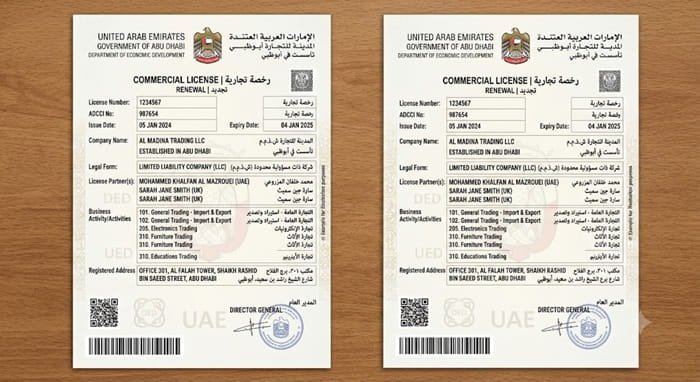
Step 8: Receive Your Business License
After approval and payment of fees, you receive:
- Trade license
- Company registration certificate
- Establishment card
From this moment, your business is officially active and legally allowed to operate.
Step 9: Open a Corporate Bank Account
Banking in the UAE is strict due to international compliance rules. Banks will assess:
- Your business model
- Source of funds
- Shareholder background
- Expected transactions
Account opening can take anywhere from one to four weeks. Choosing the right bank is important, as requirements differ widely.
Step 10: Apply for Visas
Once the company is set up, you can apply for:
- Investor or partner visas
- Employee visas
- Family visas
This includes medical tests, Emirates ID registration, and biometric verification.
Final Thoughts
The UAE offers one of the most structured and business-friendly environments in the world. The rules are clear, the process is predictable, and timelines are relatively fast. However, mistakes in activity selection or jurisdiction choice can slow things down later.
Plan carefully, choose the right structure, and think long-term. If done correctly, your UAE business can be operational in a matter of weeks and positioned for regional and global growth.